
One of the big things I’ve done recently has been to reduce my dependency on subscription-based software. I did some initial work on this a while back, but am starting to do more recently.
My first move started when Microsoft sent a notice they’d be increasing the annual subscription for Office 365. Out of all the apps in the Office suite, I mainly used Outlook. I used a bit of Word and Excel (mostly for my personal expense tracking). So, I replaced Outlook with LibreOffice and Thunderbird.
Thunderbird worked, but had some quirks. Over time, those quirks started to get frustrating. So I used Claude Code to write me a new email client app.
Within a few days, I was able to get an email client that does exactly what I want it to do. Here’s a screenshot of it, with some fake data.
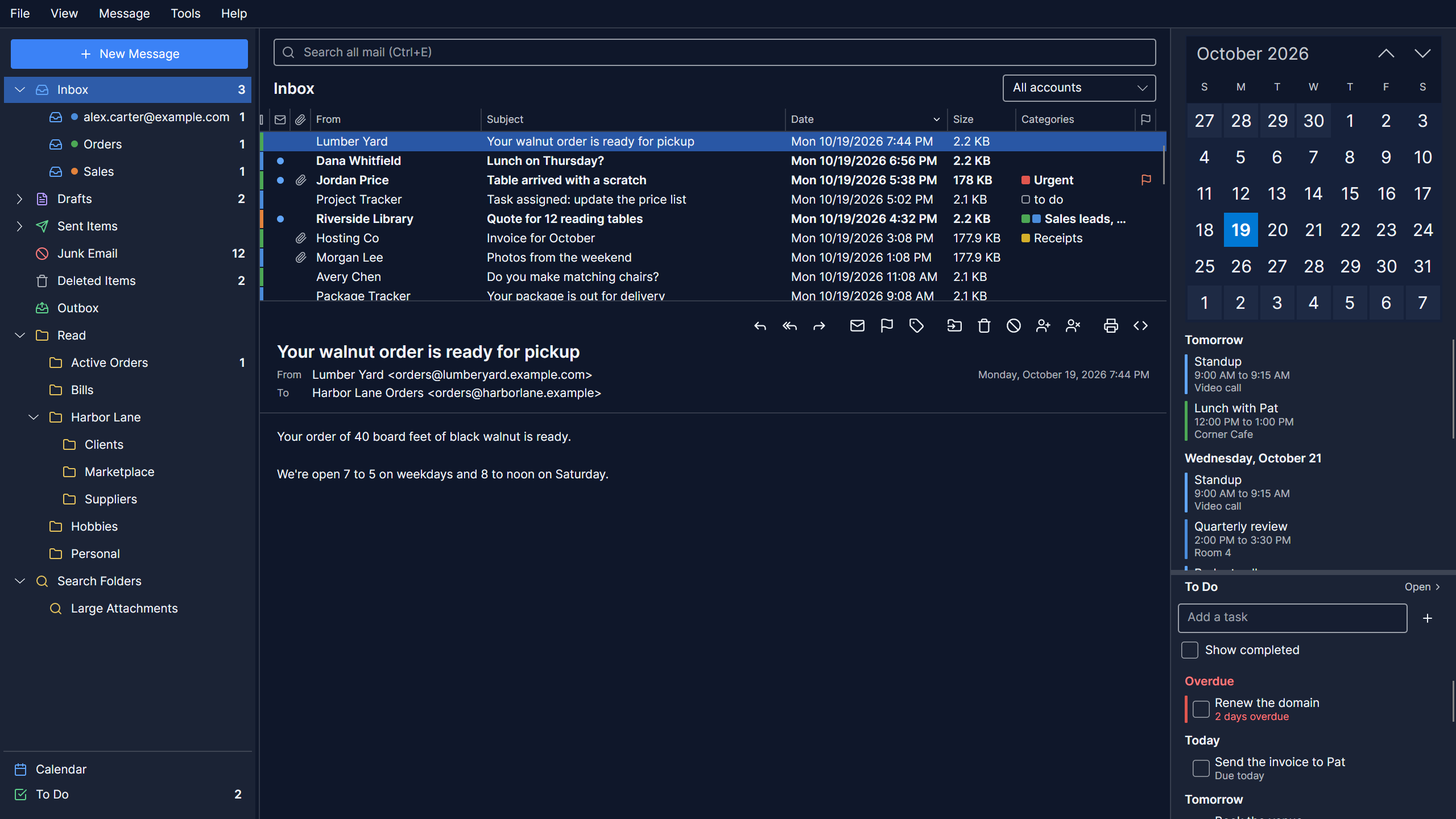
It works with my fourteen email addresses, across five domains (including Gmail). It also has nice contacts, calendar, and ‘to do’ functions. It has better search capabilities and spam detection than Outlook had.
My new app stores emails in a more stable way than the old Outlook PST files (which had a risk of getting corrupted, which could destroy my years of emails).
And, as I had Claude create the app, I ran it through my code analyzing app, to help make sure it wasn’t “slop”, but something reliable.
I’m tempted to work on it more and either try selling it (at a reasonable price, without a subscription), or maybe just giving it away.
If the companies are going to lay off developers “because of AI”, there is a certain balance in using AI to chip away at their earnings.
Leave a Comment